Análise Estática
Uma análise estática confere o código-fonte, sem carregar os binários. É algo que devemos fazer manualmente antes da pipeline e em vários estágios da pipeline para conferir.
- Verificar o código em relação às regras.
- Algumas regras já existem e são fornecidas pela comunidade colaborativa.
- Podemos criar nossas próprias regras para parar os pipelines quando necessário sabendo que outras regras serão conferidas como por exemplo o OPA.
Podemos verificar por exemplo se:
- Os limites de recursos para os pods foram definidos. Sempre é bom que seja para evitar que um pod cresça desenfreadamente.
- Se a service account usada não é a padrão, pois não é bom que seja para granularizar as permissões.
- Estamos referenciando dados sensíveis através de secrets. Não devemos ter valores sensíveis codificados diretamente nos manifestos como variáveis de ambiente ou ConfigMaps.
- Se os Dockerfiles também não possuem dados sensíveis.
- Etc.
Claro que tudo depende do caso de uso do projeto e da empresa.
Se formos colocar análise estática em uma pipeline de CI/CD onde podemos colocar essas análises? Observe que análise estática está em um momento antes do Deploy. A partir deste momento teremos outra análise, a de policies.
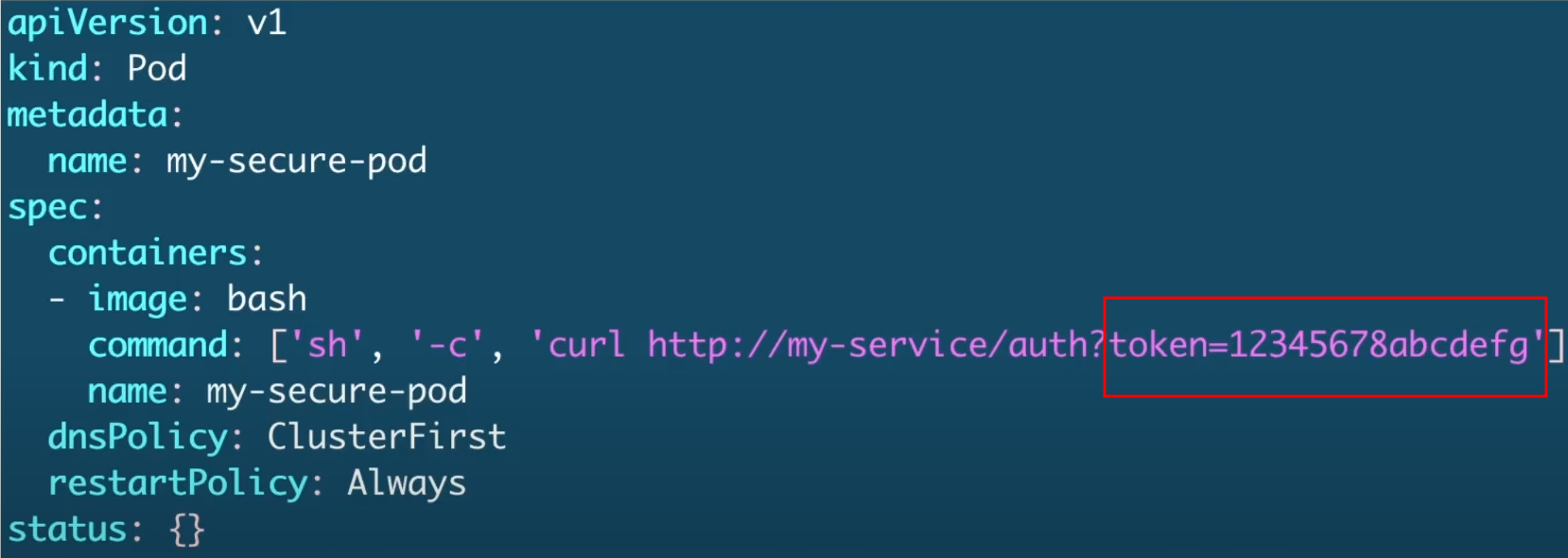
Vamos analisar o manifesto abaixo manualmente que seria o primeiro estágio de uma análise estática.
Já podemos observar que estamos passando valores sensíveis codificados diretamente no manifesto e nunca deve ser feito.
Isso só muda a referência, mas claramente está exposto.
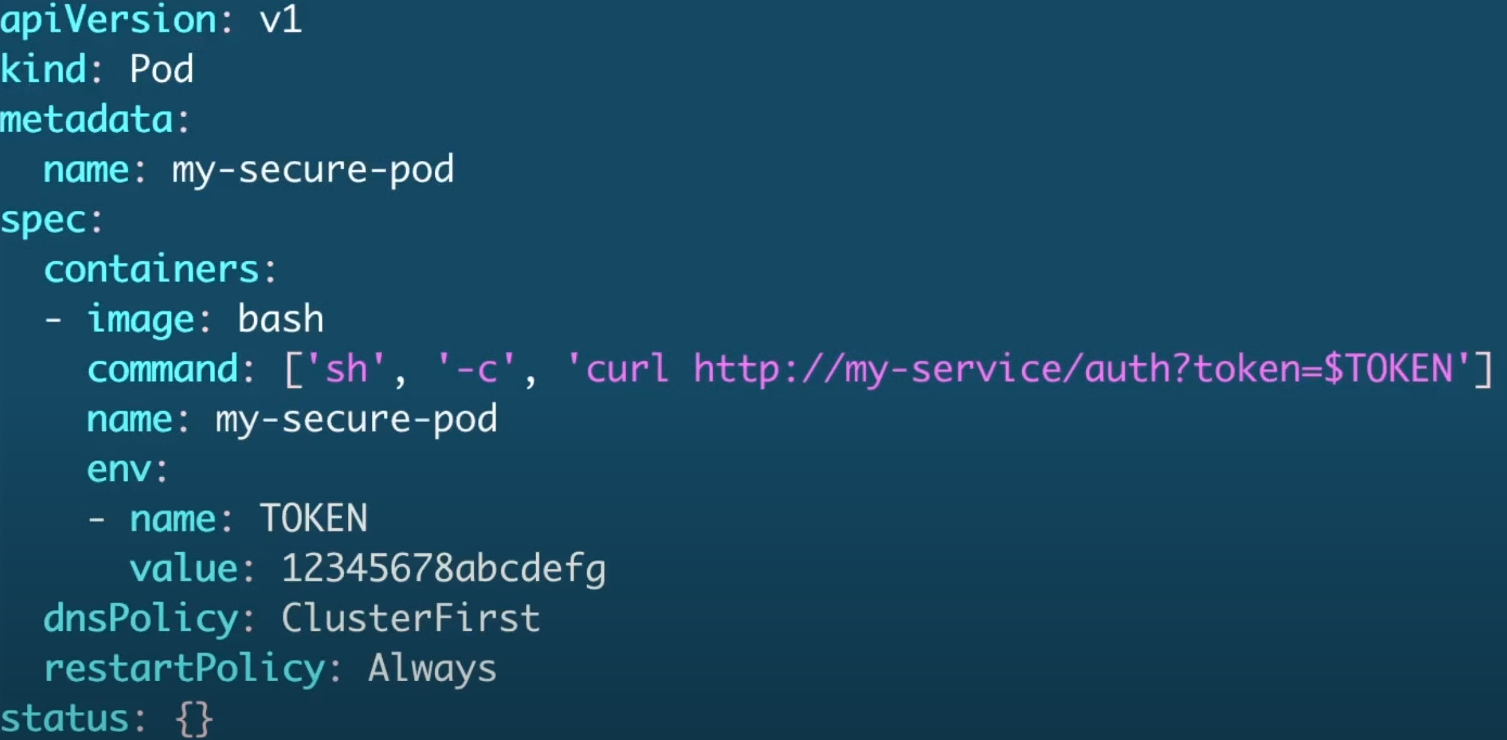
Isso já parece melhor, mas ainda não é o melhor cenário, pois poderíamos usar secrets. ConfigMaps não são secrets, parece, mas não é!

E esse seria o melhor cenário. Secrets são armazenados com melhor segurança do que ConfigMaps e podem ser criptografados. Temos também outras opções para gerenciamento de secrets de forma externa, mas nos limites do CKS é isso.

Podemos colocar plugins nas nossas IDEs que podem facilitar durante o desenvolvimento, mas não para a prova do CKS.
Kubesec
Kubesec é uma ferramenta open source que ajuda na análise de risco para os recursos do Kubernetes.
Faz uma análise estática do manifesto e confronta as melhores práticas de segurança para nos dar insights de melhoria. A ferramenta não faz a correção, apenas verificação e gera relatório.
Podemos utilizar o kubesec através de:
- Binário (local ou pipelines)
- Docker Container (local ou pipelines).
- Kubectl plugins
- Uma vez instalado o binário podemos usá-lo por dentro do kubectl.
- Admission Controller (kubesec-webhook)
Sabendo disso podemos usá-la em vários estágios, desde o momento que estamos desenvolvendo e durante o CI e CD.
Vamos testar uma análise sem instalar o binário, apenas com o docker.
root@cks-master:~# k run nginx --image=nginx -oyaml --dry-run=client > nginx.yaml

root@cks-master:~# cat nginx.yaml
apiVersion: v1
kind: Pod
metadata:
  creationTimestamp: null
  labels:
    run: nginx
  name: nginx
spec:
  containers:
  - image: nginx
    name: nginx
    resources: {}
  dnsPolicy: ClusterFirst
  restartPolicy: Always
status: {}

# Observe que vamos analisar o arquivos sem criar o pod, não esta rodando no sistema.

# Rodando com o docker passando o nginx.yaml como o standard input.
root@cks-master:~# docker run -i kubesec/kubesec:512c5e0 scan /dev/stdin < nginx.yaml
Unable to find image 'kubesec/kubesec:512c5e0' locally
512c5e0: Pulling from kubesec/kubesec
c87736221ed0: Pull complete
5dfbfe40753f: Pull complete
0ab7f5410346: Pull complete
b91424b4f19c: Pull complete
0cff159cca1a: Pull complete
32836ab12770: Pull complete
Digest: sha256:8b1e0856fc64cabb1cf91fea6609748d3b3ef204a42e98d0e20ebadb9131bcb7
Status: Downloaded newer image for kubesec/kubesec:512c5e0
[
  {
    "object": "Pod/ngix.default",
    "valid": true,
    "message": "Passed with a score of 0 points",
    "score": 0,
    "scoring": {
    # Alguns conselhos...
      "advise": [
        {
          "selector": "containers[] .securityContext .readOnlyRootFilesystem == true",
          "reason": "An immutable root filesystem can prevent malicious binaries being added to PATH and increase attack cost"
        },
        {
          "selector": "containers[] .resources .limits .cpu",
          "reason": "Enforcing CPU limits prevents DOS via resource exhaustion"
        },
        {
          "selector": "containers[] .resources .requests .memory",
          "reason": "Enforcing memory requests aids a fair balancing of resources across the cluster"
        },
        {
          "selector": "containers[] .securityContext .runAsNonRoot == true",
          "reason": "Force the running image to run as a non-root user to ensure least privilege"
        },
        {
          "selector": "containers[] .resources .limits .memory",
          "reason": "Enforcing memory limits prevents DOS via resource exhaustion"
        },
        {
          "selector": ".spec .serviceAccountName",
          "reason": "Service accounts restrict Kubernetes API access and should be configured with least privilege"
        },
        {
          "selector": "containers[] .securityContext .runAsUser -gt 10000",
          "reason": "Run as a high-UID user to avoid conflicts with the host's user table"
        },
        {
          "selector": ".metadata .annotations .\"container.seccomp.security.alpha.kubernetes.io/pod\"",
          "reason": "Seccomp profiles set minimum privilege and secure against unknown threats"
        },
        {
          "selector": ".metadata .annotations .\"container.apparmor.security.beta.kubernetes.io/nginx\"",
          "reason": "Well defined AppArmor policies may provide greater protection from unknown threats. WARNING: NOT PRODUCTION READY"
        },
        {
          "selector": "containers[] .securityContext .capabilities .drop",
          "reason": "Reducing kernel capabilities available to a container limits its attack surface"
        },
        {
          "selector": "containers[] .resources .requests .cpu",
          "reason": "Enforcing CPU requests aids a fair balancing of resources across the cluster"
        },
        {
          "selector": "containers[] .securityContext .capabilities .drop | index(\"ALL\")",
          "reason": "Drop all capabilities and add only those required to reduce syscall attack surface"
        }
      ]
    }
  }
]
Implementando algumas melhorias adicionando o recursos, service account e security context.
root@cks-master:~# vim nginx.yaml
root@cks-master:~# cat nginx.yaml
apiVersion: v1
kind: Pod
metadata:
  creationTimestamp: null
  labels:
    run: nginx
  name: nginx
spec:
  containers:
  - image: nginx
    name: nginx
    resources:
      requests:
        memory: "128Mi"
        cpu: "250m"
      limits:
        memory: "256Mi"
        cpu: "500m"
    securityContext:
      runAsNonRoot: true
  dnsPolicy: ClusterFirst
  restartPolicy: Always
status: {}

root@cks-master:~# docker run -i kubesec/kubesec:512c5e0 scan /dev/stdin < nginx.yaml
[
  {
    "object": "Pod/nginx.default",
    "valid": true,
    "message": "Passed with a score of 6 points",
    "score": 6, # O score melhorou
    "scoring": {
      "advise": [
        {
          "selector": "containers[] .securityContext .readOnlyRootFilesystem == true",
          "reason": "An immutable root filesystem can prevent malicious binaries being added to PATH and increase attack cost"
        },
        {
          "selector": "containers[] .securityContext .capabilities .drop",
          "reason": "Reducing kernel capabilities available to a container limits its attack surface"
        },
        {
          "selector": "containers[] .securityContext .capabilities .drop | index(\"ALL\")",
          "reason": "Drop all capabilities and add only those required to reduce syscall attack surface"
        },
        {
          "selector": "containers[] .securityContext .runAsUser -gt 10000",
          "reason": "Run as a high-UID user to avoid conflicts with the host's user table"
        },
        {
          "selector": ".metadata .annotations .\"container.seccomp.security.alpha.kubernetes.io/pod\"",
          "reason": "Seccomp profiles set minimum privilege and secure against unknown threats"
        },
        {
          "selector": ".metadata .annotations .\"container.apparmor.security.beta.kubernetes.io/nginx\"",
          "reason": "Well defined AppArmor policies may provide greater protection from unknown threats. WARNING: NOT PRODUCTION READY"
        }
      ]
    }
  }
]
Vamos melhorar mais...
cat pod-nginx.yaml
apiVersion: v1
kind: Pod
metadata:
  creationTimestamp: null
  labels:
    run: nginx
  name: nginx
spec:
  serviceAccountName: nginx
  containers:
  - image: nginx
    name: nginx
    resources:
      requests:
        memory: "128Mi"
        cpu: "250m"
      limits:
        memory: "256Mi"
        cpu: "500m"
    securityContext:
      runAsNonRoot: true
      runAsUser: 10001
      readOnlyRootFilesystem: true
      capabilities:
        drop:
        - ALL
  dnsPolicy: ClusterFirst
  restartPolicy: Always
status: {}
Conferinfo...
root@cks-master:~# docker run -i kubesec/kubesec:512c5e0 scan /dev/stdin < nginx.yaml
[
  {
    "object": "Pod/nginx.default",
    "valid": true,
    "message": "Passed with a score of 12 points",
    "score": 12,
    "scoring": {
      "advise": [
        {
          "selector": ".metadata .annotations .\"container.seccomp.security.alpha.kubernetes.io/pod\"",
          "reason": "Seccomp profiles set minimum privilege and secure against unknown threats"
        },
        {
          "selector": ".metadata .annotations .\"container.apparmor.security.beta.kubernetes.io/nginx\"",
          "reason": "Well defined AppArmor policies may provide greater protection from unknown threats. WARNING: NOT PRODUCTION READY"
        }
      ]
    }
  }
]
Só sobrou o apparmor e seccomp que veremos mais pra frente no curso. Vamos aplicar para ver o que conseguimos rodar.
# Criando o service account que vamos usar
root@cks-master:~# k create sa nginx
serviceaccount/nginx created

root@cks-master:~# k apply -f nginx.yaml
pod/nginx created

root@cks-master:~# k get pods
NAME    READY   STATUS             RESTARTS     AGE
nginx   0/1     CrashLoopBackOff   1 (6s ago)   9s

# Vamos procurar o problema
root@cks-master:~# k describe pod nginx
...
Conditions:
  Type                        Status
  PodReadyToStartContainers   True
  Initialized                 True
  Ready                       False
  ContainersReady             False
  PodScheduled                True
Volumes:
  kube-api-access-dfr9z:
    Type:                    Projected (a volume that contains injected data from multiple sources)
    TokenExpirationSeconds:  3607
    ConfigMapName:           kube-root-ca.crt
    ConfigMapOptional:       <nil>
    DownwardAPI:             true
QoS Class:                   Burstable
Node-Selectors:              <none>
Tolerations:                 node.kubernetes.io/not-ready:NoExecute op=Exists for 300s
                             node.kubernetes.io/unreachable:NoExecute op=Exists for 300s
Events:
  Type     Reason     Age                From               Message
  ----     ------     ----               ----               -------
  Normal   Scheduled  18s                default-scheduler  Successfully assigned default/nginx to cks-worker
  Normal   Pulled     17s                kubelet            Successfully pulled image "nginx" in 387ms (387ms including waiting). Image size: 71026652 bytes.
  Normal   Pulling    16s (x2 over 17s)  kubelet            Pulling image "nginx"
  Normal   Created    15s (x2 over 17s)  kubelet            Created container nginx
  Normal   Started    15s (x2 over 17s)  kubelet            Started container nginx
  Normal   Pulled     15s                kubelet            Successfully pulled image "nginx" in 357ms (357ms including waiting). Image size: 71026652 bytes.
  Warning  BackOff    14s (x2 over 15s)  kubelet            Back-off restarting failed container nginx in pod nginx_default(f9d3097e-95d4-4da2-a184-bb2e0d4907f4)

root@cks-master:~# k logs pods/nginx --tail 10
/docker-entrypoint.sh: Launching /docker-entrypoint.d/10-listen-on-ipv6-by-default.sh
10-listen-on-ipv6-by-default.sh: info: can not modify /etc/nginx/conf.d/default.conf (read-only file system?)
/docker-entrypoint.sh: Sourcing /docker-entrypoint.d/15-local-resolvers.envsh
/docker-entrypoint.sh: Launching /docker-entrypoint.d/20-envsubst-on-templates.sh
/docker-entrypoint.sh: Launching /docker-entrypoint.d/30-tune-worker-processes.sh
/docker-entrypoint.sh: Configuration complete; ready for start up
2024/09/02 19:35:05 [warn] 1#1: the "user" directive makes sense only if the master process runs with super-user privileges, ignored in /etc/nginx/nginx.conf:2
nginx: [warn] the "user" directive makes sense only if the master process runs with super-user privileges, ignored in /etc/nginx/nginx.conf:2
2024/09/02 19:35:05 [emerg] 1#1: mkdir() "/var/cache/nginx/client_temp" failed (30: Read-only file system)
nginx: [emerg] mkdir() "/var/cache/nginx/client_temp" failed (30: Read-only file system)
Seguindo as regras perdemos alguams permissões que eram contornadas por ser usuário root e colocamos o filesystem como readonly.
Precisamos que o nginx funcione desta maneira, poderíamos usar uma imagem preparada para o usuário como vimos anteriomente, mas vamos tentar resolver.
Em todos os diretórios que ele precisar escrever podemos criar um emptydir para resolver o problema.
Para a configuração do nginx podemos criar um configmap que será no nginx o /etc/nginx/conf.d/ onde ele buscará as configurações do nginx e criar outros diretórios para o nginx escrever.
root@cks-master:~# vim configmap.yaml
root@cks-master:~# cat configmap.yaml
apiVersion: v1
kind: ConfigMap
metadata:
  name: nginx-config-map
data:
  default.conf: |
    server {
      listen 8080;
      server_name localhost;
      location / {
        root /usr/share/nginx/html;
        index index.html;
      }
    }
root@cks-master:~# k apply -f configmap.yaml
configmap/nginx-config-map created
root@cks-master:~# vim nginx.yaml
root@cks-master:~# cat nginx.yaml
apiVersion: v1
kind: Pod
metadata:
  creationTimestamp: null
  labels:
    run: nginx
  name: nginx
spec:
  serviceAccountName: nginx
  containers:
  - image: nginx
    name: nginx
    resources:
      requests:
        memory: "128Mi"
        cpu: "250m"
      limits:
        memory: "256Mi"
        cpu: "500m"
    securityContext:
      runAsNonRoot: true
      runAsUser: 10001
      readOnlyRootFilesystem: true
      capabilities:
        drop:
        - ALL
    volumeMounts:
    - name: nginx-cache
      mountPath: /var/cache/nginx
    - name: nginx-config
      mountPath: /etc/nginx/conf.d/default.conf
      subPath: default.conf
    - name: nginx-run
      mountPath: /var/run/
  volumes:
    - name: nginx-cache
      emptyDir: {}
    - name: nginx-config
      configMap:
        name: nginx-config-map
    - name: nginx-run
      emptyDir: {}
  dnsPolicy: ClusterFirst
  restartPolicy: Always
status: {}

root@cks-master:~# k apply -f nginx.yaml
pod/nginx created
root@cks-master:~# k get pods
NAME    READY   STATUS    RESTARTS   AGE
nginx   1/1     Running   0          3s
Voltando ao assunto do apparmoar e seccomp, vamos resolver só para ficar bonito!
root@cks-master:~# vim nginx.yaml
root@cks-master:~# cat nginx.yaml
apiVersion: v1
kind: Pod
metadata:
  creationTimestamp: null
  labels:
    run: nginx
  name: nginx
  # Adicionando essas annotations como pediu no kubesec
  annotations:
    container.seccomp.security.alpha.kubernetes.io/pod: 'runtime/default'
    container.apparmor.security.beta.kubernetes.io/nginx: 'runtime/default'
spec:
  serviceAccountName: nginx
  containers:
  - image: nginx
    name: nginx
    resources:
      requests:
        memory: "128Mi"
        cpu: "250m"
      limits:
        memory: "256Mi"
        cpu: "500m"
    securityContext:
      runAsNonRoot: true
      runAsUser: 10001
      readOnlyRootFilesystem: true
      capabilities:
        drop:
        - ALL
        # Ao aplicar o pod observamos que a partir da 1.30 a a annotation será deprecisada referente ao apparmor e provavelmente o kubesec terá que se ajustar para olhar aqui.
      appArmorProfile:
        type: RuntimeDefault
    volumeMounts:
    - name: nginx-cache
      mountPath: /var/cache/nginx
    - name: nginx-config
      mountPath: /etc/nginx/conf.d/default.conf
      subPath: default.conf
    - name: nginx-run
      mountPath: /var/run/
  volumes:
    - name: nginx-cache
      emptyDir: {}
    - name: nginx-config
      configMap:
        name: nginx-config-map
    - name: nginx-run
      emptyDir: {}
  dnsPolicy: ClusterFirst
  restartPolicy: Always
status: {}

# Resolvido no score máximo
root@cks-master:~# docker run -i kubesec/kubesec:512c5e0 scan /dev/stdin < nginx.yaml
[
  {
    "object": "Pod/nginx.default",
    "valid": true,
    "message": "Passed with a score of 16 points",
    "score": 16,
    "scoring": {}
  }
]

root@cks-master:~# k apply -f nginx.yaml
pod/nginx created
root@cks-master:~# k get pods
NAME    READY   STATUS    RESTARTS   AGE
nginx   1/1     Running   0          5s
root@cks-master:~# k logs pods/nginx --tail 5
2024/09/02 19:54:03 [notice] 1#1: OS: Linux 5.15.0-1067-gcp
2024/09/02 19:54:03 [notice] 1#1: getrlimit(RLIMIT_NOFILE): 1048576:1048576
2024/09/02 19:54:03 [notice] 1#1: start worker processes
2024/09/02 19:54:03 [notice] 1#1: start worker process 21
2024/09/02 19:54:03 [notice] 1#1: start worker process 22
Podemos instalar o binário e fazer a mesma coisa
root@cks-master:~# wget https://github.com/controlplaneio/kubesec/releases/download/v2.14.1/kubesec_linux_amd64.tar.gz

netes-server-linux-amd64.tar.gz  kubesec_linux_amd64.tar.gz
root@cks-master:~# tar -xzvf kubesec_linux_amd64.tar.gz
CHANGELOG.md
LICENSE
README.md
kubesec

root@cks-master:~# chmod +x kubesec

root@cks-master:~# mv kubesec /usr/local/bin/

root@cks-master:~# kubesec version
version 2.14.1
git commit 2d31e51659470451e6c51cb47be1df9e103fb49d
build date 2024-08-19T11:48:06Z

#Só para comparar com a versão do docker, não conseguimos, provalmente esse container foi buildado diretamente com o projeto.

# Olhando na página dockerhub no kubesec vimos que essa imagem tem 5 anos e esta na documentação oficial da ferramenta. https://hub.docker.com/r/kubesec/kubesec/tags?page=&page_size=&ordering=&name=512c5e0
root@cks-master:~# docker run -i kubesec/kubesec:512c5e0 version
version unknown
git commit unknown
build date unknown

# Seria a mesma saída que o comando abaixo, mudando para a versão mais nova.
# root@cks-master:~# docker run -i kubesec/kubesec:v2.14.1 scan /dev/stdin < nginx.yaml
root@cks-master:~# kubesec scan nginx.yaml
[
  {
    "object": "Pod/nginx.default",
    "valid": true,
    "fileName": "nginx.yaml",
    "message": "Passed with a score of 16 points",
    "score": 16,
    "scoring": {
      "passed": [
        {
          "id": "ApparmorAny",
          "selector": ".metadata .annotations .\"container.apparmor.security.beta.kubernetes.io/nginx\"",
          "reason": "Well defined AppArmor policies may provide greater protection from unknown threats. WARNING: NOT PRODUCTION READY",
          "points": 3
        },
        {
          "id": "ServiceAccountName",
          "selector": ".spec .serviceAccountName",
          "reason": "Service accounts restrict Kubernetes API access and should be configured with least privilege",
          "points": 3
        },
        {
          "id": "SeccompAny",
          "selector": ".metadata .annotations .\"container.seccomp.security.alpha.kubernetes.io/pod\"",
          "reason": "Seccomp profiles set minimum privilege and secure against unknown threats",
          "points": 1
        },
        {
          "id": "RunAsNonRoot",
          "selector": ".spec, .spec.containers[] | .securityContext .runAsNonRoot == true",
          "reason": "Force the running image to run as a non-root user to ensure least privilege",
          "points": 1
        },
        {
          "id": "RunAsUser",
          "selector": ".spec, .spec.containers[] | .securityContext .runAsUser -gt 10000",
          "reason": "Run as a high-UID user to avoid conflicts with the host's users",
          "points": 1
        },
        {
          "id": "LimitsCPU",
          "selector": "containers[] .resources .limits .cpu",
          "reason": "Enforcing CPU limits prevents DOS via resource exhaustion",
          "points": 1
        },
        {
          "id": "LimitsMemory",
          "selector": "containers[] .resources .limits .memory",
          "reason": "Enforcing memory limits prevents DOS via resource exhaustion",
          "points": 1
        },
        {
          "id": "RequestsCPU",
          "selector": "containers[] .resources .requests .cpu",
          "reason": "Enforcing CPU requests aids a fair balancing of resources across the cluster",
          "points": 1
        },
        {
          "id": "RequestsMemory",
          "selector": "containers[] .resources .requests .memory",
          "reason": "Enforcing memory requests aids a fair balancing of resources across the cluster",
          "points": 1
        },
        {
          "id": "CapDropAny",
          "selector": "containers[] .securityContext .capabilities .drop",
          "reason": "Reducing kernel capabilities available to a container limits its attack surface",
          "points": 1
        },
        {
          "id": "CapDropAll",
          "selector": "containers[] .securityContext .capabilities .drop | index(\"ALL\")",
          "reason": "Drop all capabilities and add only those required to reduce syscall attack surface",
          "points": 1
        },
        {
          "id": "ReadOnlyRootFilesystem",
          "selector": "containers[] .securityContext .readOnlyRootFilesystem == true",
          "reason": "An immutable root filesystem can prevent malicious binaries being added to PATH and increase attack cost",
          "points": 1
        }
      ],
      "advise": [
        {
          "id": "AutomountServiceAccountToken",
          "selector": ".spec .automountServiceAccountToken == false",
          "reason": "Disabling the automounting of Service Account Token reduces the attack surface of the API server",
          "points": 1
        },
        {
          "id": "RunAsGroup",
          "selector": ".spec, .spec.containers[] | .securityContext .runAsGroup -gt 10000",
          "reason": "Run as a high-UID group to avoid conflicts with the host's groups",
          "points": 1
        }
      ]
    }
  }
]
Acabamos encontrando mais melhorias. Podemos observar que agora ele mostra os itens que passou, mas já temos mais dois novos advises.
root@cks-master:~# vim nginx.yaml
root@cks-master:~# cat nginx.yaml
apiVersion: v1
kind: Pod
metadata:
  creationTimestamp: null
  labels:
    run: nginx
  name: nginx
  annotations:
    container.seccomp.security.alpha.kubernetes.io/pod: 'runtime/default'
    container.apparmor.security.beta.kubernetes.io/nginx: 'runtime/default'
spec:
  serviceAccountName: nginx
  automountServiceAccountToken: false # Adicionado
  containers:
  - image: nginx
    name: nginx
    resources:
      requests:
        memory: "128Mi"
        cpu: "250m"
      limits:
        memory: "256Mi"
        cpu: "500m"
    securityContext:
      runAsNonRoot: true
      runAsUser: 10001
      runAsGroup: 10001 # Adicionado
      readOnlyRootFilesystem: true
      capabilities:
        drop:
        - ALL
      appArmorProfile:
        type: RuntimeDefault
    volumeMounts:
    - name: nginx-cache
      mountPath: /var/cache/nginx
    - name: nginx-config
      mountPath: /etc/nginx/conf.d/default.conf
      subPath: default.conf
    - name: nginx-run
      mountPath: /var/run/
  volumes:
    - name: nginx-cache
      emptyDir: {}
    - name: nginx-config
      configMap:
        name: nginx-config-map
    - name: nginx-run
      emptyDir: {}
  dnsPolicy: ClusterFirst
  restartPolicy: Always
status: {}

root@cks-master:~# kubesec scan nginx.yaml
[
  {
    "object": "Pod/nginx.default",
    "valid": true,
    "fileName": "nginx.yaml",
    "message": "Passed with a score of 18 points",
    "score": 18,
    "scoring": {
      "passed": [
        {
          "id": "ApparmorAny",
          "selector": ".metadata .annotations .\"container.apparmor.security.beta.kubernetes.io/nginx\"",
          "reason": "Well defined AppArmor policies may provide greater protection from unknown threats. WARNING: NOT PRODUCTION READY",
          "points": 3
        },
        {
          "id": "ServiceAccountName",
          "selector": ".spec .serviceAccountName",
          "reason": "Service accounts restrict Kubernetes API access and should be configured with least privilege",
          "points": 3
        },
        {
          "id": "SeccompAny",
          "selector": ".metadata .annotations .\"container.seccomp.security.alpha.kubernetes.io/pod\"",
          "reason": "Seccomp profiles set minimum privilege and secure against unknown threats",
          "points": 1
        },
        {
          "id": "AutomountServiceAccountToken",
          "selector": ".spec .automountServiceAccountToken == false",
          "reason": "Disabling the automounting of Service Account Token reduces the attack surface of the API server",
          "points": 1
        },
        {
          "id": "RunAsGroup",
          "selector": ".spec, .spec.containers[] | .securityContext .runAsGroup -gt 10000",
          "reason": "Run as a high-UID group to avoid conflicts with the host's groups",
          "points": 1
        },
        {
          "id": "RunAsNonRoot",
          "selector": ".spec, .spec.containers[] | .securityContext .runAsNonRoot == true",
          "reason": "Force the running image to run as a non-root user to ensure least privilege",
          "points": 1
        },
        {
          "id": "RunAsUser",
          "selector": ".spec, .spec.containers[] | .securityContext .runAsUser -gt 10000",
          "reason": "Run as a high-UID user to avoid conflicts with the host's users",
          "points": 1
        },
        {
          "id": "LimitsCPU",
          "selector": "containers[] .resources .limits .cpu",
          "reason": "Enforcing CPU limits prevents DOS via resource exhaustion",
          "points": 1
        },
        {
          "id": "LimitsMemory",
          "selector": "containers[] .resources .limits .memory",
          "reason": "Enforcing memory limits prevents DOS via resource exhaustion",
          "points": 1
        },
        {
          "id": "RequestsCPU",
          "selector": "containers[] .resources .requests .cpu",
          "reason": "Enforcing CPU requests aids a fair balancing of resources across the cluster",
          "points": 1
        },
        {
          "id": "RequestsMemory",
          "selector": "containers[] .resources .requests .memory",
          "reason": "Enforcing memory requests aids a fair balancing of resources across the cluster",
          "points": 1
        },
        {
          "id": "CapDropAny",
          "selector": "containers[] .securityContext .capabilities .drop",
          "reason": "Reducing kernel capabilities available to a container limits its attack surface",
          "points": 1
        },
        {
          "id": "CapDropAll",
          "selector": "containers[] .securityContext .capabilities .drop | index(\"ALL\")",
          "reason": "Drop all capabilities and add only those required to reduce syscall attack surface",
          "points": 1
        },
        {
          "id": "ReadOnlyRootFilesystem",
          "selector": "containers[] .securityContext .readOnlyRootFilesystem == true",
          "reason": "An immutable root filesystem can prevent malicious binaries being added to PATH and increase attack cost",
          "points": 1
        }
      ]
    }
  }
]

root@cks-master:~# k apply -f nginx.yaml
pod/nginx created

root@cks-master:~# k get pods
NAME    READY   STATUS    RESTARTS   AGE
nginx   1/1     Running   0          3s